
Wasatch Front excavating
Excavation Contractors in Salt Lake City, UT
Residential excavating planned around Lake Bonneville clay, foothill benches and the Wasatch Fault.
- Free estimates at your property
- Itemized written quotes
- Blue Stakes locate before every dig
Digging the Bed of an Ancient Lake
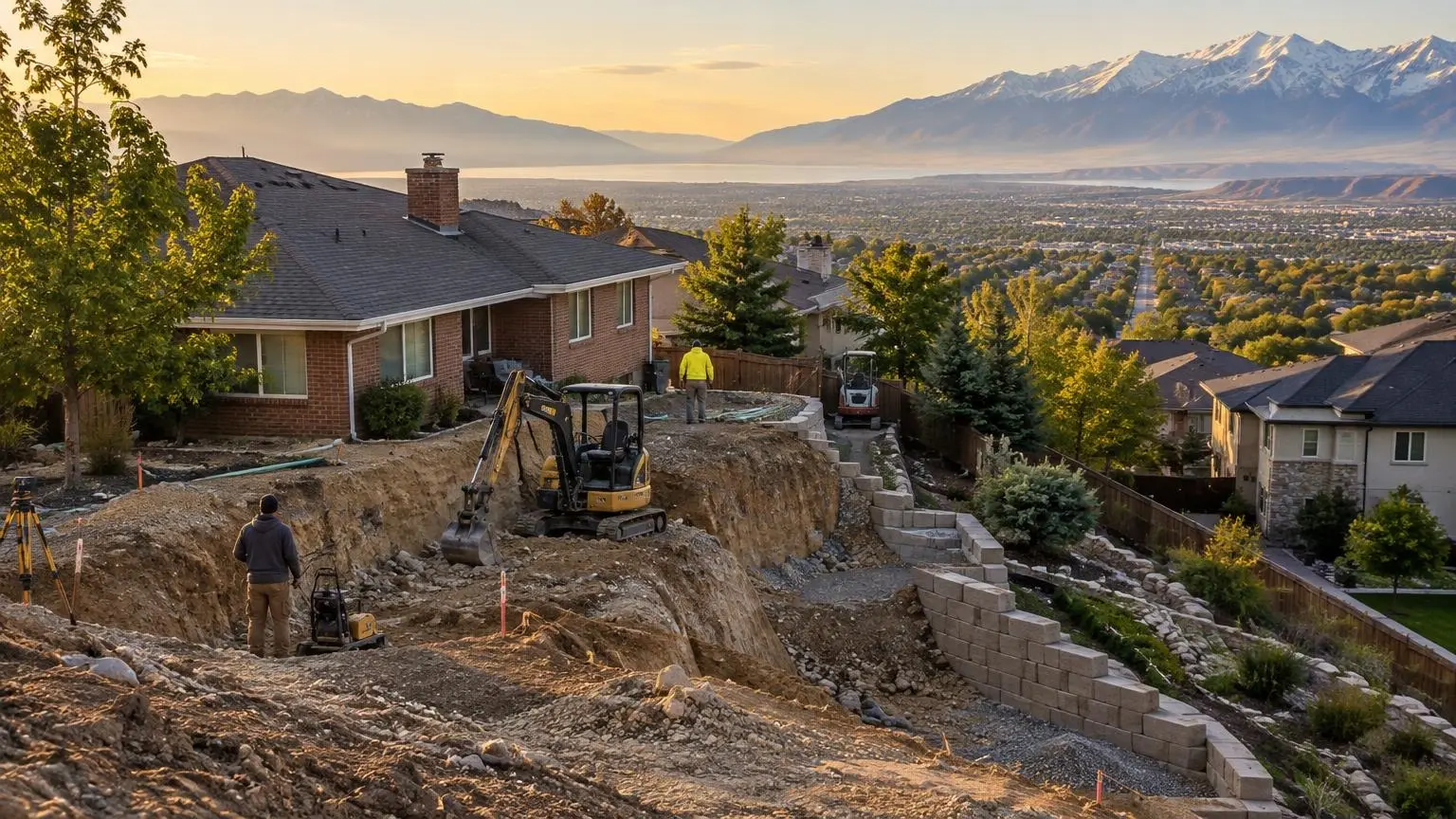
Excavation contractors in Salt Lake City dig into the floor of Lake Bonneville, the Ice Age lake whose shorelines still show as terraces on the foothills. Our excavating work covers basements and additions, retaining wall earthwork, sewer and water laterals, French drains and regrading, teardowns and concrete removal, and pool and pond digs for homeowners and small builders. The city runs from about 4,210 feet near the Jordan River to the benches below the Wasatch, and the ground changes a lot over that climb.
Clay, silt and water
The valley floor is lake sediment. The USDA Taylorsville soil series, with its type location in Salt Lake County, formed in calcareous lake deposits and carries 27 to 35 percent clay in the 10- to 40-inch zone, with slow permeability. Soils like that hold water against foundations, get sticky when wet and hard when dry, and need careful compaction. We plan drainage and backfill around them on every job.
Faults and liquefaction
The Wasatch Fault runs along the base of the mountains and is considered capable of a magnitude 7.5 earthquake. In 2021, researchers found that the Warm Springs and East Bench faults connect beneath the city. Most predicted damage in a large quake would come from liquefaction of the valley's clay- and sand-based soils. On March 18, 2020, a magnitude 5.7 earthquake near Magna damaged unreinforced masonry across the valley. Some cities, like Draper, require site-specific fault studies in mapped zones; we build to whatever your engineer specifies.
Frost line and snow
Salt Lake City's design criteria set a 30-inch frost line. The city sees about 127 days a year at or below freezing, and snow typically falls from early November to mid-April. Footings, water lines and drains go below frost, and we avoid backfilling with frozen material.
Spring runoff
Snowmelt is the valley's flood season. In 1983 City Creek overflowed and city engineers turned several downtown streets into waterways. Lots below the benches and near creeks need grading and drains that can handle a fast spring melt.
Blue Stakes first
Utah's one-call center is Blue Stakes of Utah 811. Requests go in at least three business days before digging, and marks are valid for 21 calendar days. We file the ticket and wait for marks on every job.
Who we work for
Most of our jobs come from homeowners planning a specific project and from small builders, remodelers, pool companies, plumbers and landscapers who need a reliable excavating crew. Either way, the same rules apply: plan first, locate utilities, protect the site, compact properly and leave it clean.
How a job runs
- Site visit and a look at slope, soil, water and access
- Written, itemized estimate
- Blue Stakes ticket and any city permits
- Excavation with shoring or sloping where depth requires it
- Drainage, compacted backfill and finish grade
- Hauling and cleanup
Why Homeowners Call Excavation Contractors Salt Lake City
Clay-aware backfill
Lake sediments are compacted in thin lifts at the right moisture so they do not settle against your house.
Shoring before entry
Deep basement and lateral digs are sloped, benched or boxed before anyone steps in.
Blue Stakes on every dig
Tickets go in three business days ahead, and we wait for every mark.
Plain, itemized quotes
Digging, hauling, stone, compaction and restoration are each priced on their own line.
Where We Work
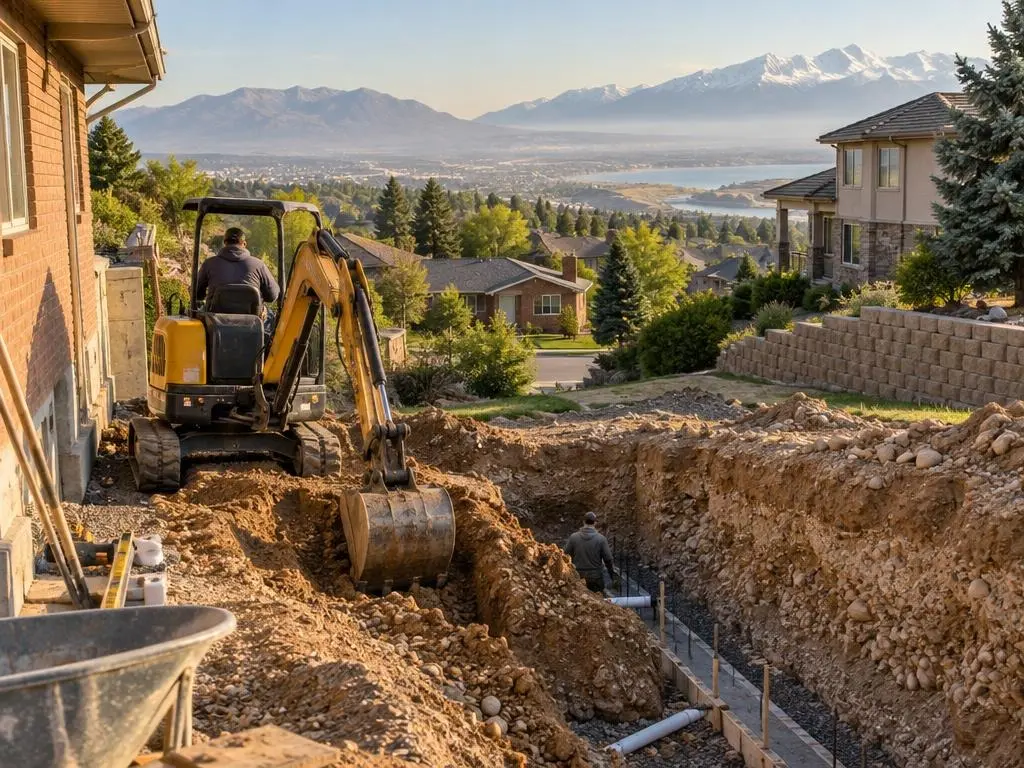
We work in Salt Lake City and across the valley: South Salt Lake, Millcreek, Holladay, Murray, Cottonwood Heights, Midvale, Sandy and Draper on the east side; Taylorsville, West Valley City, Kearns, Magna, West Jordan, South Jordan, Riverton and Herriman on the west and south; Bountiful, Centerville, Farmington and Layton in Davis County; and Lehi across the Point of the Mountain. Each city has its own permit office and design criteria, and the ground ranges from high-water-table flats near the Jordan River to steep foothill benches. The town pages cover the details.
- Excavation Contractors in Salt Lake City, UT
- Excavation Contractors in South Salt Lake, UT
- Excavation Contractors in Millcreek, UT
- Excavation Contractors in Holladay, UT
- Excavation Contractors in Murray, UT
- Excavation Contractors in Cottonwood Heights, UT
- Excavation Contractors in Sandy, UT
- Excavation Contractors in Draper, UT
- Excavation Contractors in West Jordan, UT
- Excavation Contractors in South Jordan, UT
- Excavation Contractors in Riverton, UT
- Excavation Contractors in Herriman, UT
- Excavation Contractors in West Valley City, UT
- Excavation Contractors in Taylorsville, UT
- Excavation Contractors in Kearns, UT
- Excavation Contractors in Magna, UT
- Excavation Contractors in Midvale, UT
- Excavation Contractors in Bountiful, UT
- Excavation Contractors in Farmington, UT
- Excavation Contractors in Centerville, UT
- Excavation Contractors in Layton, UT
- Excavation Contractors in Lehi, UT
Excavating Services
Six kinds of residential excavating from the Avenues to the south valley.
Basement & Addition Digs
Excavation for new basements, additions, footings and crawl space conversions.
Learn more →Retaining Wall Earthwork
Cutting, footing prep, drainage stone and backfill for retaining walls on sloped lots.
Learn more →Sewer & Water Lateral Digs
Excavation to replace or repair the sewer and water lines between your house and the street.
Learn more →French Drains & Lot Regrading
French drains, curtain drains and regrading that move snowmelt and storm water away from homes.
Learn more →Teardowns & Concrete Removal
Demolition of garages, sheds, decks, pools and old concrete, with hauling and a clean, graded site.
Learn more →Pool & Pond Digging
Excavation for in-ground pools, hot tubs, ponds and water features, with spoil hauled or reused.
Learn more →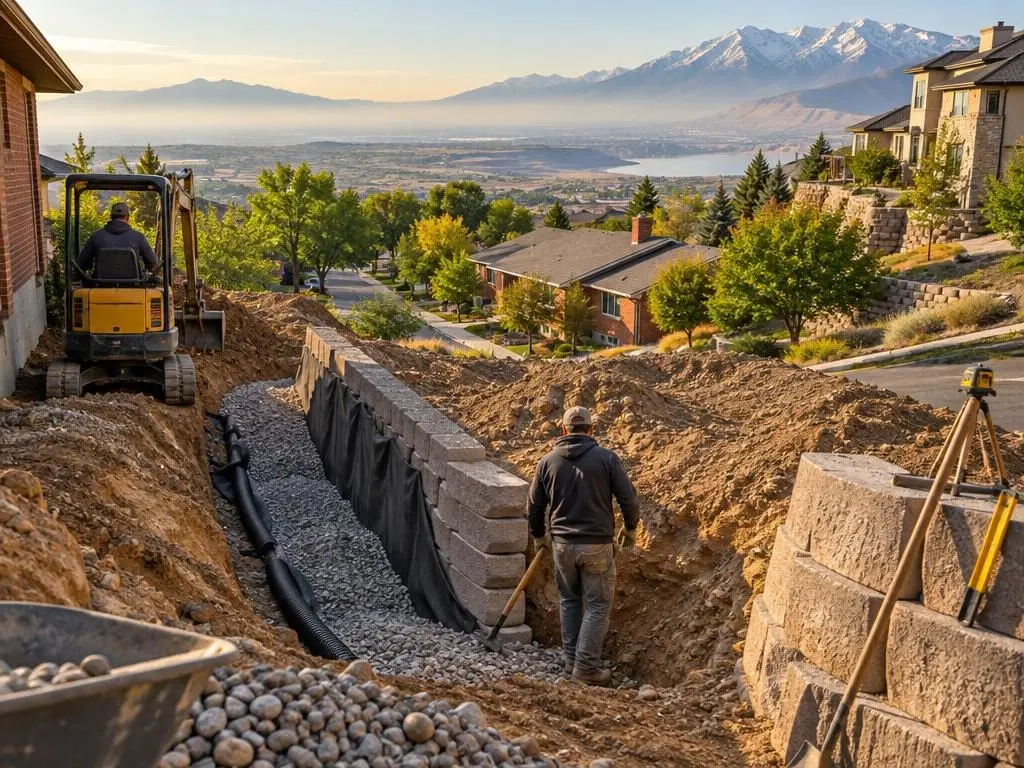
Common Questions
What do excavating contractors do?
They dig, move and shape soil for construction and repairs: basements and footings, trenches for sewer and water lines, drainage, retaining wall cuts, grading, demolition and hauling. On a home project, the excavator usually works before and alongside the concrete, plumbing and landscape crews.
How much does excavation cost in Salt Lake City?
HomeBlue puts a machine with operator in Salt Lake City at about $200 to $350 an hour, roughly $1,600 to $2,800 for a full day, with hauling at $400 to $600 or more per truckload. A new-home basement dig-out runs about $3,900 to $6,900 by its estimate. Access, depth, groundwater and hauling change the total.
How deep is the frost line in Salt Lake City?
Salt Lake City's design criteria list a 30-inch frost line. Many neighboring cities, such as West Jordan and Riverton, publish the same depth.
Do I need to call Blue Stakes before digging?
Yes. Blue Stakes of Utah 811 asks for at least three business days notice, and marks stay valid for 21 calendar days. We place the request on our jobs.
Is liquefaction a concern for my project?
For most yard and utility work it does not change much. For new foundations and additions, especially in mapped high-liquefaction areas like much of Murray, the engineer or soils report sets the requirements, and we excavate and compact to them.
Can you dig in winter?
Often, between storms. Frozen ground slows work, and frozen soil cannot be used as backfill. Emergency sewer and water repairs happen year-round.
Do you work for builders and other trades?
Yes. Remodelers, pool companies, plumbers and landscapers hire us for the excavating part of their projects, and we work to their plans and schedules.
Request an Excavating Estimate
Free estimates in Salt Lake City and across the valley.